Learning AI
from the numbers up.

I'm Dylan Bice, a CPA who has spent my whole career in finance - a master's in taxation, several years at Deloitte, and these days a controller at a Fortune 500 subsidiary. At some point I started leaning on AI to take the tedious parts off my own plate, fell down the rabbit hole, and I've been figuring out what it's actually good for ever since.
My background is in the numbers: accounting, KPIs, forecasting, the data side of how a business really runs. I'm not a software engineer. I lean on AI tools to build things I couldn't have built from scratch a few years ago, and honestly that's the whole point. The gap between “I have an idea” and “I built the thing” has never been smaller, and you don't need a computer science degree to cross it. The clearest proof is Booktru, a client portal and live financial dashboard I built to run my own accounting practice on.
These days I spend most of my time figuring out where AI genuinely helps small business owners, entrepreneurs, and finance folks, across both the financial and the operational side of things, and I put what I learn on YouTube for free. I've made plenty of mistakes along the way, and I'd rather you skip a few of them. This isn't about me knowing everything; it's about showing you how much of this you can do yourself.
The four levels of working with AI.
There's a clean way to think about this. It maps how far AI takes you - from a thought partner you prompt by hand, all the way to systems that run whole workflows on their own.
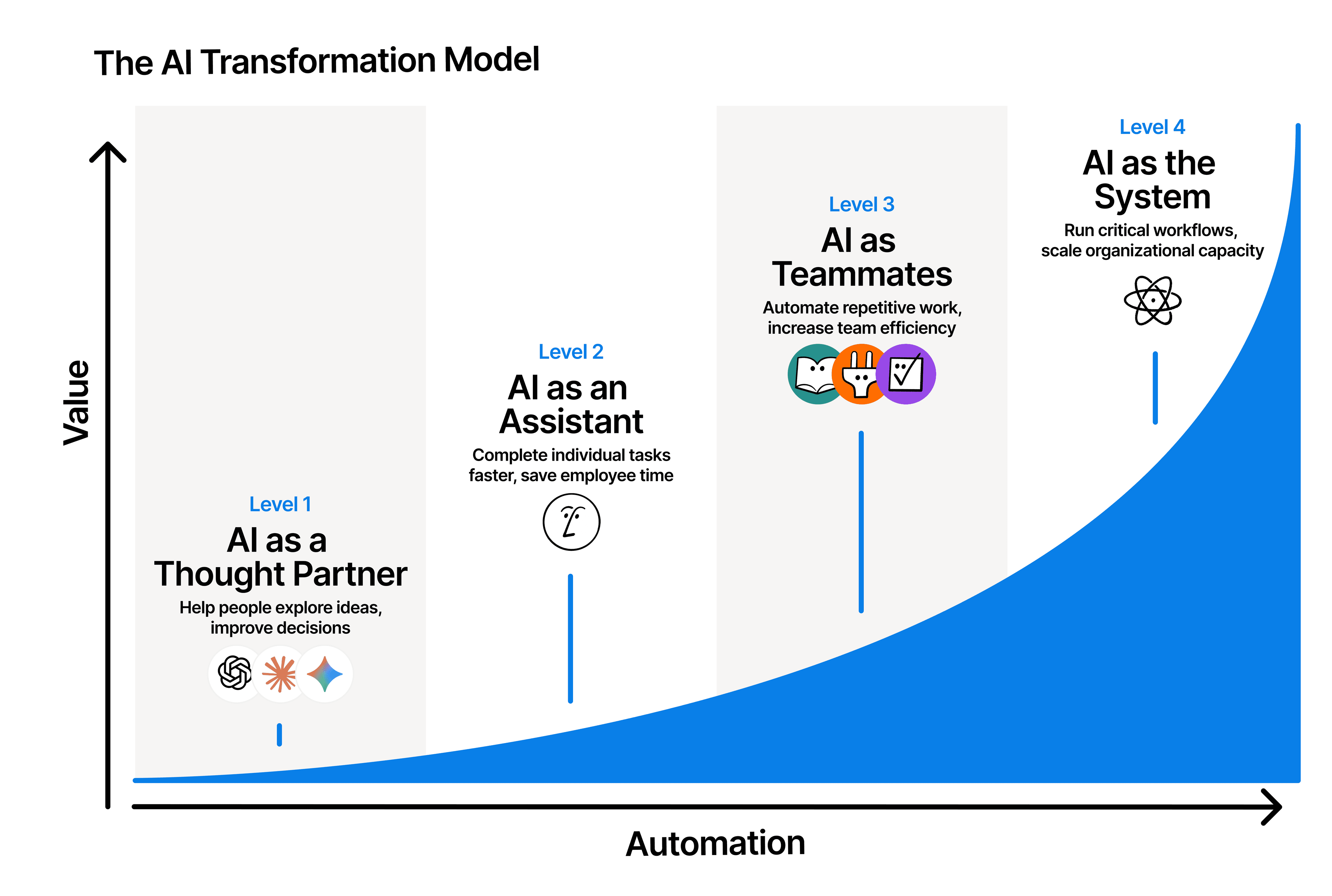
One can't happen before the other
The levels build on each other - you can't skip ahead. Automation only pays off once the context and habits underneath it are actually in place.
Most people are at Level 1
Almost everyone I talk to lives here: chatting with AI now and then, getting real value from it, but nothing that runs on its own yet.
My goal is to move you up one
Not to the top of the curve overnight, and not to turn you into an engineer. Just the next level - that's where the compounding starts.